
 floyd
floydAlbedo is the measure of how much sunlight a surface reflects back into space, expressed as a ratio between 0 and 1. A fresh snowfield with an albedo of 0.9 bounces back 90% of incoming solar energy, while dark ocean water at 0.06 absorbs nearly all of it. This simple difference in reflectiveness shapes everything from local temperatures on your favourite hiking trail to global climate patterns affecting communities across Canada.
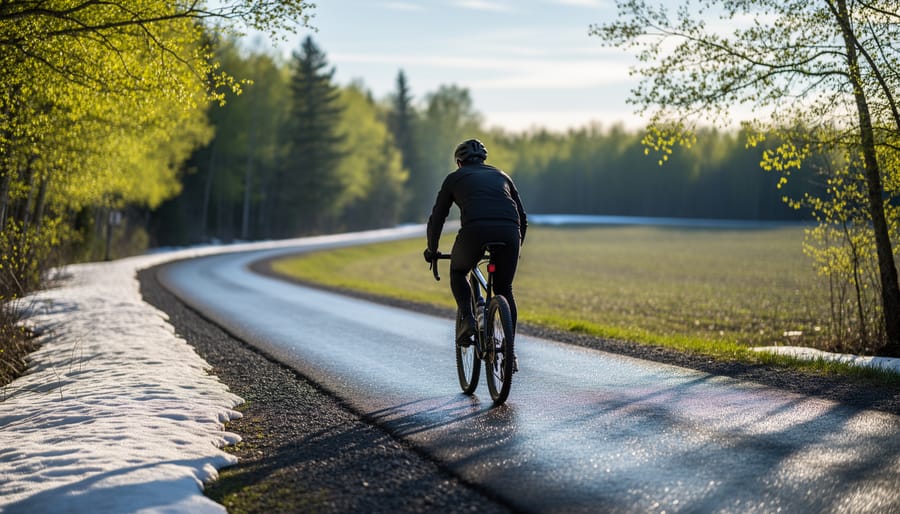
Understanding albedo helps explain why spring snow melts faster once dirt appears on its surface, or why cities feel hotter than nearby forests. When you’re cycling through varied landscapes, you’re moving through a patchwork of different albedos: bright gravel roads reflect more heat than asphalt, and green canopy cover keeps trails cooler than open fields. These aren’t just curious facts. The albedo of Earth’s surface directly influences how much solar energy stays in our atmosphere versus returning to space, making it a key factor in climate science.
NASA satellites now measure albedo across the planet, tracking how ice loss, deforestation, and land-use changes alter our world’s reflectiveness. For anyone who loves spending time outdoors, albedo connects your everyday observations to the bigger climate story. Whether you notice how quickly ice thaws on a sunny spring ride or feel the temperature difference between shaded and exposed paths, you’re experiencing albedo in action.
What Albedo Means: The Reflection Factor
At its core, albedo is simply the fraction of sunlight that bounces off a surface instead of being absorbed. Think of it as a reflectivity score. When the sun’s rays hit the ground, a building, or a patch of snow, some of that light energy reflects back toward the sky while the rest soaks in and turns into heat. Albedo measures that split.
Scientists express albedo as a number between 0 and 1. A surface with an albedo of 0 absorbs all incoming sunlight, reflecting nothing. An albedo of 1 means the surface reflects every bit of light that strikes it, absorbing zero. Most surfaces fall somewhere in between. If a surface has an albedo of 0.3, that means it reflects 30% of the sunlight and absorbs the remaining 70%.
- Albedo
- The ratio of sunlight reflected by a surface to the total amount of sunlight hitting that surface, expressed as a value between 0 and 1.
- Reflection Ratio
- The percentage of incoming solar energy that bounces back to space rather than being absorbed and converted to heat.
- Absorption
- The process by which a surface takes in sunlight and converts it to thermal energy, warming the material and the air around it.
- 0-1 Scale
- The measurement range for albedo where 0 means total absorption (no reflection) and 1 means total reflection (no absorption). An albedo of 0.5 indicates 50% reflection.
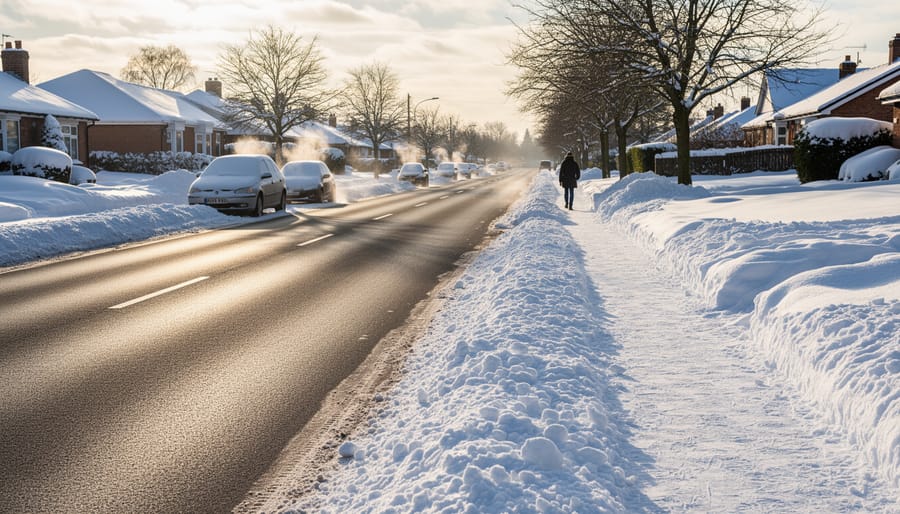
To see albedo in action, step outside on a sunny winter day and compare fresh snow to a dark asphalt road. The snow, brilliant white and almost blinding, has an albedo near 0.9, meaning it reflects about 90% of the sunlight. Stand on that snow and you’ll stay cooler. The asphalt, by contrast, has an albedo closer to 0.05. It reflects barely any light, soaking up nearly all the sun’s energy and radiating heat you can feel rising from the pavement.
The same pattern plays out across water and ice. A frozen lake with a bright ice cover bounces much of the sun’s energy back skyward. When that ice melts and reveals the darker liquid water beneath, albedo drops sharply. The ocean absorbs far more sunlight, warming faster and contributing to further melting. Understanding this reflection factor helps us see why the surfaces we encounter on our rides and hikes play such a powerful role in shaping the climate around us.
How Albedo Works: Sunlight, Surfaces, and Energy
Picture yourself standing on a brilliant white glacier on a clear summer day, squinting against the intense brightness. Now imagine stepping off that ice into a dark forest clearing where the sun-warmed earth radiates heat under your boots. That contrast captures how albedo works.
When sunlight reaches any surface on Earth, it splits into two paths. Some of the energy bounces straight back into space as reflected light. The rest gets absorbed, converting into heat that warms the surface and the air around it. Albedo measures this split: the fraction of incoming sunlight that a surface reflects rather than absorbs.
Think of it like this. A fresh snowfield acts like a mirror, sending most of the sun’s energy back skyward. The snow stays cold because it’s not holding onto that energy. But dark asphalt on your bike path does the opposite. It soaks up sunlight, storing it as heat. Touch that pavement on a hot afternoon and you’ll feel albedo at work, or rather, the lack of it.
Surface color plays the starring role here. White and light-colored materials reflect more light, giving them high albedo. Dark surfaces absorb more, resulting in low albedo. But texture and material matter too. Smooth ice reflects differently than rough sea ice. Wet soil absorbs more than dry sand. Even the angle of sunlight changes how much energy bounces back.
The outcome is straightforward: high-albedo surfaces stay cooler because they reject incoming energy. Low-albedo surfaces warm up because they trap it. This simple physics shapes everything from the temperature of your favorite trail to the balance of heat across our entire planet.
Types of Surfaces and Their Albedo
Earth’s surfaces tell a story of reflection and absorption every time sunlight touches them. When you’re out riding or hiking, the ground beneath you and the landscape around you are constantly playing this energy game, some surfaces bounce light back to space, others soak it up and turn it into heat.
Fresh snow and glacial ice sit at the top of the reflectivity ladder, with albedo values between 0.8 and 0.9. Picture that brilliant glare when you’re crossing a snow-covered field on a winter ride, nearly 90% of the sunlight hitting that white expanse shoots straight back into the sky. That’s why snow-covered landscapes stay cold even under direct sun. For anyone who has pedaled past a melting snowbank in early spring, you’ve witnessed this high-albedo surface doing its cooling work.
Forests and dark soil fall on the opposite end. Dense coniferous forests register albedo values around 0.08 to 0.15, absorbing most of the light that filters through the canopy. When you duck into a shaded forest trail on a hot day, you’re experiencing that low albedo at work, the dark needles, bark, and forest floor are holding onto solar energy. Ocean water behaves similarly, with an albedo near 0.06, which is why open water warms throughout the summer paddling season.
Common surfaces vary widely in how they handle sunlight:
- Fresh snow and ice: 0.8-0.9 (reflects most light, stays coolest)
- Desert sand and light soil: 0.3-0.4 (moderate reflection, moderate warming)
- Grasslands and cropland: 0.15-0.25 (absorbs more than half of incoming light)
- Forests and dark soil: 0.08-0.15 (absorbs most light, generates significant heat)
- Ocean water: 0.06 (absorbs nearly all light, warms gradually)
- Dark asphalt and pavement: 0.05-0.1 (minimal reflection, intense heat absorption)
Deserts present an interesting middle ground, with sandy surfaces reflecting about 30 to 40% of sunlight, enough to create that shimmering heat mirage effect you might notice on a long desert ride, but not enough to keep temperatures down. Clouds add another layer of complexity, with thick white clouds bouncing back up to 90% of light while thin, wispy clouds barely make a dent.
This diversity matters because every patch of ground you pass contributes to the local temperature and, collectively, to Earth’s overall energy balance. The dark asphalt bike path radiating heat at midday, the cool relief of a snow-dusted mountain pass, the warmth rising from a sun-baked rock face, these are albedo differences you can feel.
Why Albedo Matters for Earth’s Climate
Albedo isn’t just a number scientists track from space, it’s a thermostat that helps regulate Earth’s temperature. Surfaces with high albedo, like ice and snow, bounce sunlight back into space before it can warm our planet. Surfaces with low albedo, like dark ocean water or bare soil, absorb that energy and convert it to heat. This balance between reflection and absorption directly controls how much solar energy stays in Earth’s system, making albedo a fundamental driver of our climate.
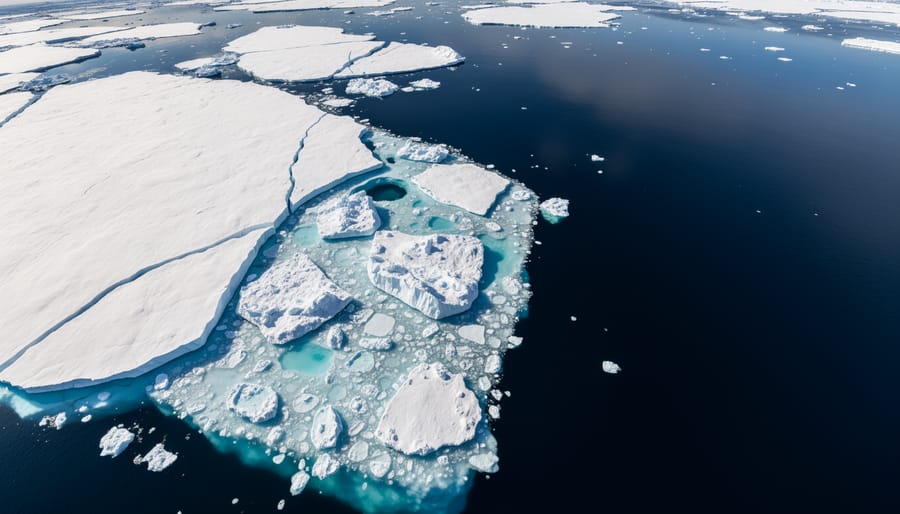
Here’s where it gets critical: albedo creates powerful feedback loops that can accelerate climate change. When Arctic sea ice melts, it exposes dark ocean water beneath. That water, with its low albedo, absorbs far more sunlight than the bright ice it replaced. The ocean warms, which melts more ice, which exposes more dark water, which absorbs even more heat. This self-reinforcing cycle is one reason the Arctic is warming faster than any other region on Earth, amplifying global warming impacts we’re witnessing across Canada.
Land use changes also shift Earth’s overall albedo. When forests are cleared, the dark canopy that once absorbed sunlight is replaced by lighter cropland or exposed soil, which can either increase or decrease local albedo depending on what replaces the trees. Deforestation in tropical regions often reduces albedo because dark soil is exposed, while replacing boreal forests with snow-covered ground can increase it. Either way, these changes disrupt the reflection balance our climate has relied on for millennia.
The stakes are real, but so are the solutions. Scientists monitor these albedo shifts using satellite data, giving us early warnings about climate vulnerabilities. Communities are responding with climate-smart design, reflective roofs in cities, strategic reforestation, and protection of ice-covered regions. Every action that preserves high-albedo surfaces or increases reflectivity in warming areas helps slow the feedback loops that drive climate change. Understanding albedo empowers us to see our planet’s reflective power not as a passive measurement, but as something we can protect and restore.
How Scientists Measure Albedo
From hundreds of kilometers above Earth’s surface, NASA’s fleet of Earth-observing satellites carries specialized instruments that continuously measure albedo and surface reflectance across every continent and ocean. These instruments capture reflected sunlight at different wavelengths, creating detailed maps of how much solar energy bounces back from ice sheets, forests, deserts, cities, and seas. The satellites orbit our planet multiple times daily, building a comprehensive, near-real-time picture of Earth’s reflective behavior.
Scientists translate this satellite data into albedo values for virtually every patch of the planet’s surface. They track changes over time, watching how a glacier’s bright ice darkens with dust, how spring greening shifts forest reflectivity, or how an urban expansion replaces reflective grassland with heat-absorbing asphalt. This global monitoring reveals patterns invisible from the ground, a melting Arctic ice cap, shifting cloud cover over tropical oceans, or the seasonal pulse of snow cover across the Northern Hemisphere.
This information feeds directly into climate models that predict future temperatures and weather patterns. When scientists know precisely how much sunlight different surfaces reflect versus absorb, they can better forecast regional warming, understand extreme weather events, and identify tipping points in Earth’s climate system. The satellite measurements also help communities respond to environmental shifts, from planning drought-resilient agriculture to designing cooler, more livable cities. It’s a powerful example of how technology helps us see our living planet as a whole, constantly adjusting its reflective shield against the sun.
Albedo in Action: From Your Bike Path to the Arctic
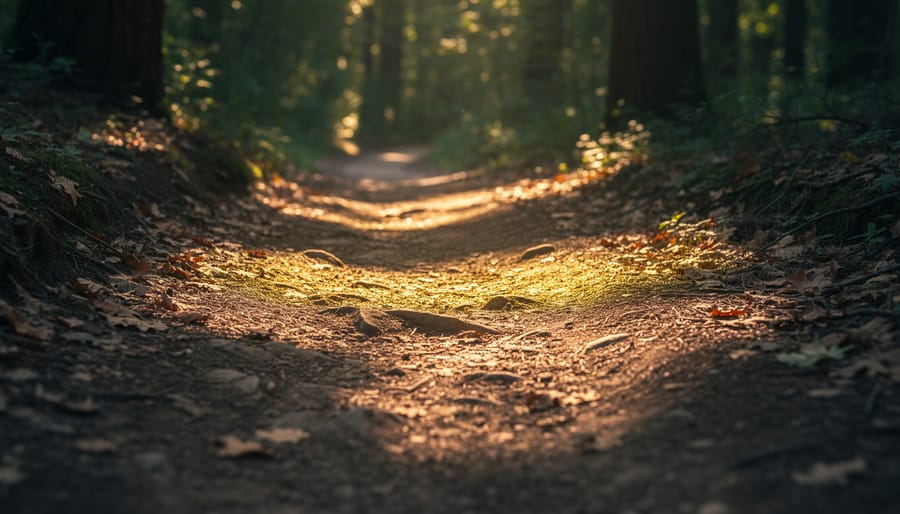
Standing on a dark asphalt bike path in the middle of a summer afternoon, you can feel the heat radiating through your shoes. Walk twenty meters into a shaded forest trail, and the temperature drops noticeably. That’s albedo at work in your own backyard.
Cities experience this temperature difference on a massive scale. Urban heat islands form when dark pavement, rooftops, and buildings absorb sunlight instead of reflecting it. While a forest or grassland might have an albedo of 0.15 to 0.25, fresh asphalt sits around 0.05, soaking up nearly all incoming solar energy and converting it to heat. On a sweltering day, surface temperatures on dark pavement can reach 50°C or higher, while lighter surfaces stay significantly cooler.
Communities are responding with climate-smart design. Cool roofs painted white or coated with reflective materials can have albedo values of 0.6 or more, dramatically reducing heat absorption. Some cities are experimenting with lighter-colored pavement and expanding tree canopy coverage to raise neighborhood albedo and lower temperatures. These aren’t just technical fixes, they’re choices that make our streets more livable and our summers more bearable.
Travel north, and albedo’s influence becomes even more dramatic. A cyclist who rode through the Yukon five years ago and returned this season might notice glaciers that have visibly retreated, exposing darker rock beneath. That shift from brilliant white ice to grey stone lowers the landscape’s overall reflectivity, accelerating local warming in a feedback loop that’s reshaping the Arctic faster than almost anywhere else on Earth.
Understanding albedo helps us see these connections and turn into changemakers. Whether we’re advocating for cooler city design, protecting high-albedo ecosystems, or simply choosing lighter gear and surfaces in our own spaces, we’re working with the same reflective forces that govern our planet’s energy balance.
Frequently Asked Questions About Albedo
Frequently Asked Questions About Albedo
You probably have questions after learning about albedo, and you’re not alone. Here are answers to what people ask most often, along with what this all means for the trails, rivers, and landscapes we love.
What is albedo?
Albedo is the fraction of sunlight that a surface reflects back to space rather than absorbing. It’s measured on a scale from 0 to 1, where fresh snow might have an albedo of 0.9 (reflecting 90% of light) and dark ocean water around 0.06 (reflecting just 6%).
Why is albedo important for Earth’s climate?
Albedo determines how much solar energy our planet absorbs versus reflects, directly affecting global temperatures. When ice melts and exposes darker water or land, albedo drops, more heat gets trapped, and warming accelerates, a feedback loop that makes understanding albedo critical for climate action.
How do colors relate to albedo?
Lighter colors reflect more sunlight and have higher albedo, while darker colors absorb more energy and have lower albedo. That’s why a white roof keeps a building cooler than a black one, and why melting white ice has such dramatic climate consequences when it reveals dark ocean beneath.
What can individuals do about albedo changes?
You can advocate for reflective roofing and pavement in your community to reduce urban heat islands, support policies that protect high-albedo ecosystems like glaciers and ice sheets, and participate in local climate initiatives that address land use. Every action that preserves reflective surfaces or cools urban spaces makes a difference.
These aren’t just academic questions. When you’re riding through a city and feel the temperature drop as you enter a tree-shaded park, or when you notice how much cooler a gravel path feels compared to black asphalt on a summer afternoon, you’re experiencing albedo at work. Understanding these patterns helps you see the climate story written into every landscape you explore, and it equips you to be part of the solution, whether that means pushing for greener infrastructure in your neighbourhood or joining a community ride that raises awareness about environmental change.
Albedo isn’t just a number on a scientific scale. It’s the pulse of our planet’s climate, a living force you can see on every bike ride, hike, and paddle. From the brilliant glare of fresh snow that keeps mountain valleys cool to the dark forest paths that soak up summer warmth, albedo shapes the world we explore and the future we’re building together.
Understanding how surfaces reflect or absorb sunlight connects us more deeply to the landscapes we love. It reveals why melting glaciers accelerate warming, why cities swelter in summer heat, and why the choices we make, from urban design to ecosystem restoration, matter more than ever. This knowledge isn’t abstract. It’s a call to action, a reminder that every reflective surface, every protected ice sheet, every forest we preserve plays a role in stabilizing our climate.
At Ride for Climate Canada, we believe the best climate action starts with community. When we pedal together, we share stories, spark conversations, and transform understanding into momentum. If learning about albedo has deepened your connection to Earth’s climate systems, join us. Discover how Ride works to bring people together for climate solutions, explore the Ride for Climate Impact we’re creating across Canada, and become part of a movement that celebrates both the science and the soul of our shared home.